8/26/2018

Medium-rare pork, to eat or not to eat??


The stigma against well-done steak does not extend to its white-meat cousin, pork. Americans don’t think twice before cooking our pork chops until they’re white (verging on gray) throughout, and some people might even squirm a bit when served a pink-center tenderloin. But friends, that’s wrong. To avoid the menace of shoe-leather pork, we should in fact be cooking it to medium-rare.

“I think a lot of pork has tended to be overcooked, and that traces back to when trichinella was considered a huge issue in pork. Most people grew up on pork being traditionally overcooked, even myself,” Martin Bucknavage, senior food safety extension associate at Penn State’s Department Of Food Science, tells The Takeout. “When it comes to pork, a lot of people don’t even use a thermometer, they just cook the hell out of it.”

Arbiters at the National Pork Board are here to change those hearts and minds. The organization recommends cooking pork loins and chops to an internal temperature of 145 degrees Fahrenheit—that’s a pink-centered medium rare, folks—followed by a 3-minute rest before serving. This wasn’t always the case: Prior to 2011, the typical recommendation was 15 degrees higher. (Ground pork, however, should still be cooked to 160.) What changed?

“Meat generally continues to cook even after it’s removed from a heat source so this just acknowledges that,” Kevin Waetke, vice president of strategic communication for the National Pork Board, tells The Takeout. “If you cook it until it’s gray or white on the heat, and then you remove it, then it’s going to continue to cook until it’s a dry and leathery. And no one wants that.”


Research in the early part of this decade found that, following a 3-minute rest, pork cooked to 145 degrees is safe to eat. Since most Americans’ food realistically does sit for at least three minutes before they eat it, this became the new industry standard.

But what about trichinosis and other nasty illnesses that can come from undercooked meat?
“Gone are the days of foodborne pathogens that did require a more thorough cooking. Back in the 1930 and 1940s, trichinosis was an important food safety factor, but that’s gone, essentially, from the food system,” Waetke says.

That’s because most American pork since the 1990s is raised indoors rather than in pastures. While grass and outdoor pens might sound idyllic, from a food-safety standpoint, pork is much more likely to contain trichinosis when pigs are raised outside, Waetke says. Concrete floors with proper bedding has led to increased “biosecurity,” as he puts it, compared to dirt pastures.

“Where that stigma comes from, why people are afraid of that pink, I think it’s a very outdated idea. With more advances in how animals are kept and treated and fed especially, that’s why we’re able to now feel more comfortable eating pork less than really well done,” Joe Magnanelli, executive chef of San Diego’s Urban Kitchen Group, tells The Takeout. “The pigs that we use, they come from a co-op of farms called Salmon Creek Farms. They’re all the same breed, all given the same wheat and barley diet, kept in sanitary conditions, so we can be confident in that.”

His restaurants’ servers ask guests how they’d prefer their pork chops cooked; if they defer to the kitchen, Manganelli says he’ll mostly cook chops to medium or just above.

“I think our clientele are getting more educated on this, too.”

Chefs have long been onboard with the less-done end of the pork spectrum. The National Pork Board’s announcement of the new pork-temperature guidelines in 2011 includes a quote from one Mr. Guy Fieri, who says: “It’s great news that home cooks can now feel confident to enjoy medium-rare pork, like they do with other meats. The foodservice industry has been following this pork cooking standard for nearly 10 years.”

One group, however, remains stubbornly behind the times.

“We’re doing a lot of education with producers of meat thermometers,” Waetke says. “We need to get meat thermometers’ [guidelines] changed to that 145.”

Source

10/25/2016

Here is a reminder that you are still single


Here is a reminder that you are still single

Source

Red Wine Hot Chocolate Is The Ultimate Winter Beverage


Hot chocolate may be a childhood favorite, but pairing it with red wine makes for a super adult, super comforting, super warming beverage.

To make this indulgently delicious alcoholic beverage, simply dissolve some good dark chocolate in milk (click the link below for exact ratios), then stir in a cup of a big, bold red wine, such as a Cabernet Sauvignon. Pour into a fancy mug, top with whipped cream and whatever other toppings you desire (perhaps a little orange zest for brightness?), and sip until you’re warmed throughout.

10/24/2016

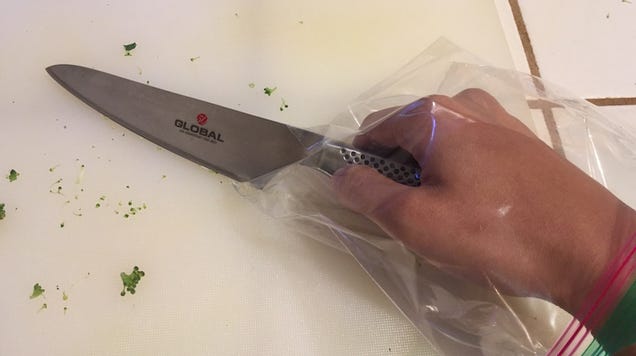
Keep a Plastic Sandwich Bag on Your Hand While Cutting Peppers


If you cook with hot peppers often, you know that protecting your hands with gloves helps keep your hands (and anything you touch) from burning for hours afterwards. If you don’t have gloves, a plastic bag will do the trick.

You’ll want a baggie that’s thin and flexible enough to be able to maneuver your knife through. Plastic wrap also works in a pinch. You could just use one for the hand you’ll hold the peppers with, or you can grab two bags and poke a hole through the bottom or corner of one so your knife can fit through. Put the other bag on the hand you’ll use to handle the cut peppers, then you’re ready to start. Remove the bags carefully by using one bagged hand to pull the bag off your knife hand and throw it away. Then gently remove the bag from your other hand, and toss them out. No fuss and no burning.

Source

10/19/2016

Use the Rule of Three to Identify Toxic People You Should Try to Avoid


It’s hard to tell the difference between someone who screws up once and someone who makes a habit of taking advantage of others. To get a better handle on who you can trust, follow the rule of three.
As advice site Barking Up the Wrong Tree explains, some people are simply too toxic to include in your life. However, if you label everyone who ever wrongs you as “toxic,” you’ll start to lose friends fast. Instead, apply the rule of three to identify when the bad behavior is just part of who they are. If they lie to you or let you down once, it might just be a fluke. If it happens repeatedly, it’s a pattern. Harvard psychologist Martha Stout explains it this way:
One lie, one broken promise, or a single neglected responsibility may be a misunderstanding instead. Two may involve a serious mistake. But three lies says you’re dealing with a liar, and deceit is the linchpin of conscienceless behavior.
Of course, there may be some exceptions that you can be conscious of. If they drop the ball on some critical responsibility a few times after a family member dies, that might be understandable. If there’s always some family member that died whenever they let you down, they might be lying to you. Watch for patterns in their actions, rather than focusing solely on their words.

10/18/2016

12 Ingredients That Add Big Flavor to Any Vegetable Dish


I know some people are perfectly content to munch away on a big ol’ stalk of raw broccoli, but I need a little more encouragement in the veggie-eating arena. Luckily, Lucky Peach has compiled a list of twelve flavor-blasted pantry items to add depth, texture, and taste to all of your favorite vegetables.

Click the link below for in-depth descriptions and recipe ideas, but this should get you started:
  • Bread Crumbs: Whether you make your own of grab a can of the store-bought stuff, bread crumbs are a great way to add crispy texture.
  • Chili Crisp: This mixture of fried chilis and crunchy little soybeans packs a ton of savory, onion-y, spicy goodness.
  • Capers: These little pickled berries of briney delight belong in your next salad.
  • Curry Leaves: These leaves “impart a citrusy and resinous aroma and flavor that’s pretty much incomparable to any other herb” and—according to Lucky Peach—they should make an appearance in your next carrot dish.
  • Little Fish: Tiny fishes (whether they be whole or in delicious fish sauce) are a quick and easy way to impart a ton of complex, salty, umami-packed flavor to any vegetable, roasted or raw.
  • Garlic: I don’t think I need to tell you why garlic is on here.
  • Hing: This dried and ground plant resin has a fairly intense odor, but push past that and you’ll be greeted with a “very umami” condiment that “quite literally adds what tastes like another dimension of flavor to a dish.”
  • Kombu: Add this super savory kelp to your veggie broth to dial up the flavor in a major way.
  • Dried Shiitakes: Like kombu above, these dehydrated shrooms boost broth in matter of minutes.
  • Miso: A miso compound butter is the best fried of roasted vegetables, and it absolutely sings in hummus.
  • Soy Sauce: Lucky Peach recommends usukuchi soy sauce, which is a “lighter-flavored and slightly saltier soy sauce that’s got extra stuff in it.” (The “extra stuff” is a sweetener and mirin.)
  • Vinegar: A quick hit of acid can really brighten up a green, and I always have at least four different types of vinegar around at any given time.
  • The “Power Triangle”: If all else fails, you can always fall back on fat, salt, and acid. A drizzle of olive oil, a squeeze of lemon juice, and even a few flakes of some fancy salt can transform vegetables (or grains, or anything, really) from “meh” to “craveable.”
In addition to the above tastiness, I’d also like to add nutritional yeast and Parmesan to the list, because anything that can get me excited about kale deserves a mention.